DeltaPCS / inverter – string
Delta PCS100HV 100 kW bi-directional ESS inverter (400 Vac)
100 kW grid-tied/off-grid bi-directional battery inverter with 650–1350 Vdc input, black-start, IP55 cabinet for C&I storage.
Proven in BST.SOLAR projects: the PCS100HV is a 100 kW bi-directional inverter for C&I storage at 400 V, with a wide 650–1350 V DC window for lithium, lead-acid or flow batteries, black start, off-grid 3P4W operation and sub-20 ms response. IP55 outdoor cabinet, EN 50549-1 certified for European grids.
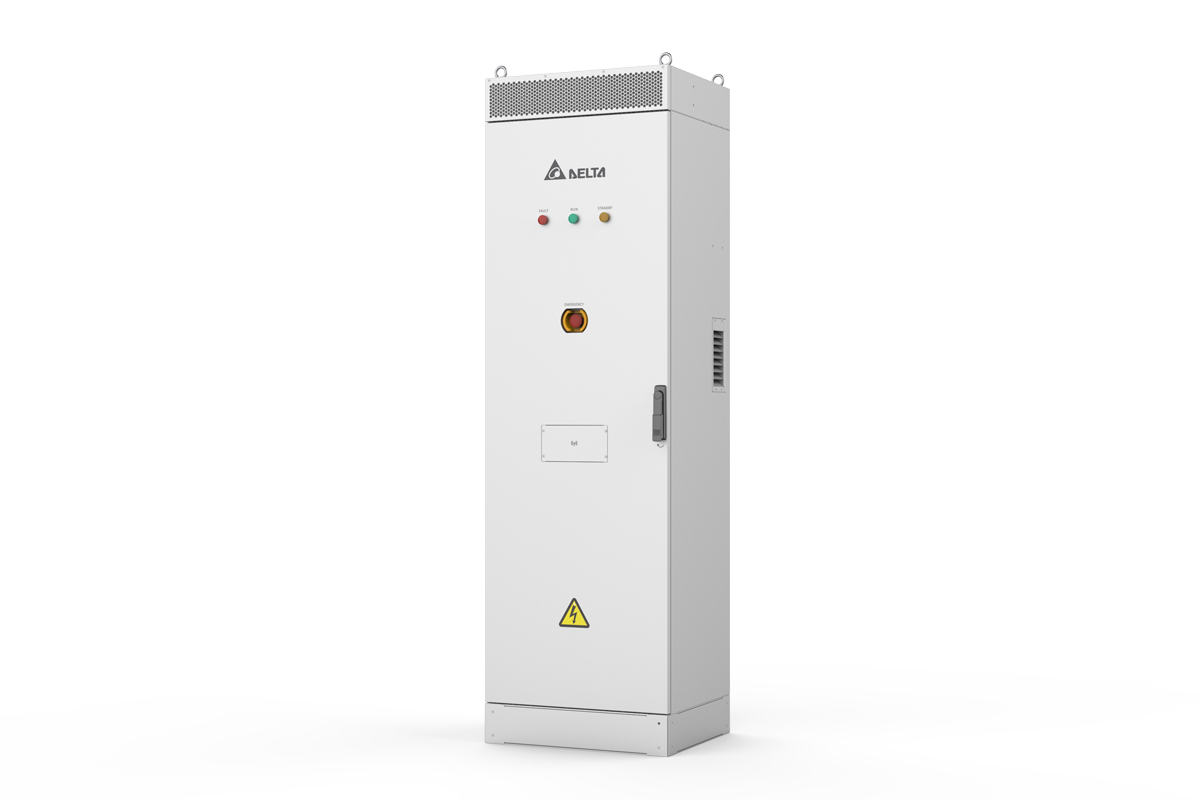
Key specifications
| Rated power | 100 kVA/kW (102 kW discharge / 98 kW charge, 110 kVA max) |
|---|---|
| DC voltage range | 650–1350 Vdc (3P3W), 700–1350 Vdc off-grid 3P4W |
| AC voltage | 400 Vac 3P-N-PE / 3P-PE, 352–440 Vac, 50 Hz |
| Peak efficiency | >98%, standby <25 W |
| Protection | IP55, -30…+60 °C (derating >45 °C), forced air |
| Dimensions/weight | 600×2000×500 mm / 230 kg |
| Certifications | IEC 62477-1, EN 62477-1, EN 50549-1:2019, CE, UKCA |
| Off-grid | yes, black start, PF -1…1, <20 ms response, Modbus TCP |
Manufacturer data; details, options and current revision in the official datasheet. Subject to change.
Typical applications
- Power backup
- Peak shaving, load shifting
- PV self-consumption / smoothing
- Microgrids
- Li-ion, lead-acid and flow batteries
Why from BST.SOLAR?
- Design and sizing for your load profile – not a catalogue sale.
- Installation, grid connection and ComAp-based control from one team.
- Commissioning, remote monitoring and O&M support in Hungary.
Application in practice
The Delta PCS100HV is a 100 kW bi-directional battery inverter for 400 Vac sites: Hungarian factories, logistics centres, farms and commercial buildings reducing their power demand charge, increasing PV self-consumption or running a backup supply. With 102 kW discharge, 98 kW charge and 110 kVA maximum, it pairs with 650 to 1350 Vdc battery racks of lithium-ion, lead-acid or flow technology. Grid-tied and off-grid operation, black start and switchover below 20 ms suit genset hybrid microgrids, where a ComAp controller or BST Control Box coordinates generator, PV and storage.
BST Solar has already supplied this unit and provides sizing, rack selection, the EN 50549-1 compliant 400 V grid connection, Modbus TCP EMS integration and commissioning. The IP55 enclosure and -30 to +60 °C operating range allow outdoor placement, and at 600×2000×500 mm and 230 kg the cabinet fits a small footprint next to the battery container or in a technical room. Peak efficiency above 98% and standby consumption below 25 W keep operating losses low in daily cycling. Certification to IEC/EN 62477-1 supports the safety documentation for the installation.
When to choose this product
- You need a 100 kW class bi-directional inverter on a 400 V three-phase low-voltage connection for a C&I site.
- Your battery racks operate between 650 and 1350 Vdc, with lithium-ion, lead-acid or flow batteries from your chosen supplier.
- Backup or island operation with black start and switchover below 20 ms is required, for example in a genset hybrid microgrid.
- The inverter must be IP55 rated for outdoor installation and operate from -30 to +60 °C.
Frequently asked questions
Which batteries are compatible with the PCS100HV?
The inverter accepts lithium-ion, lead-acid and flow batteries with a DC voltage between 650 and 1350 V in grid-tied mode and 700 to 1350 V in off-grid mode. The BMS communicates over Modbus TCP. BST checks the rack voltage window, the BMS protocol and the protection concept and commissions the battery-inverter link on site.
Can the PCS100HV supply a site in island mode during a grid outage?
Yes. The unit operates grid-tied and off-grid, offers black start and switches in less than 20 ms, so critical loads can continue on battery power. In a hybrid microgrid a ComAp controller or BST Control Box coordinates the inverter with a genset and PV. BST designs the switching and protection scheme.
What are the installation requirements for the cabinet?
The cabinet measures 600×2000×500 mm, weighs 230 kg, is IP55 rated and works from -30 to +60 °C, so it can stand outdoors or in a technical room. The AC connection is 400 V three-phase with neutral and PE, certified to EN 50549-1 and IEC/EN 62477-1. BST handles the grid connection documentation and commissioning.
Need this equipment for your project?
Send us your load profile or project outline and we return a sized proposal with delivery time.
Call our engineering team: +36 1 451 8070